Automatic Car D
Starting with D, which stands for Drive. This is your go-to mode for everyday driving. When you select D, you're allowing the car's computer to manage gear changes automatically based on speed and acceleration needs .
D – Drive : This is the most common driving position—a driver shifts to the drive gear when moving the car forward. If you’re looking for automatic transmission tips, understanding these letters is the first step to smoother driving.
You’ll likely use this gear when stopping and starting the car. D-Drive: The D gear is used while driving .
3D Automatic Car Icon Illustration Render 52011625 PNG
Mode D is driving, ie the mode of normal forward movement, when the gearbox selects and shifts the desired speed by itself . Operating modes L, 1, 2, 3 In older automatic cars you will often find modes L, 1, 2, 3 or D1, D2, D3.
what does P mean on automatic carwhat does D and S mean on automatic carwhats the difference between D and S on automatic carhow to drive automatic car?#auto Published June 24, 2022 Views 36K
If your car has letters, it will usually be in one of these four positions: P, R, N, or D. If your vehicle has numbers, it will be in either first gear (which is indicated by the number one), or second gear (which is shown by the number two). Mazda uses a variety of symbols to indicate the different automatic transmission modes available in its cars.
Some cars may also feature more or within off-road vehicles to be able to climb or descend terrain easier. Any car without a clutch pedal is considered an automatic.
And if you're looking to learn how to drive a manual car or help to pass the theory test - check out our quick and easy guide with pictures here. Automatic cars work by changing the gears for you under normal driving conditions. Most automatic gearboxes will let you select between ‘P’ (for park), ‘R’ (reverse), ‘N’ (neutral) and ‘D’ (drive).
Depending on the car, S can mean Super on some makes, making the transmission upshift at higher revs than normal. On other makes S is the same as 2nd gear and limits the transmission to first or second gear only. Automatics typically follow the standard pattern of "PRND", Park, Reverse, Neutral, Drive.
Leave the car in D while you're driving . This is perhaps the best part about driving an automatic! Once you get going, you don't have to mess with the gear shifter at all. Just keep it in D, regardless of your speed.
L – Low Gear: This position is typically used for towing or driving on steep inclines. · · S - Sport: Puts the car into a lower gear so you can have more power and control when accelerating.
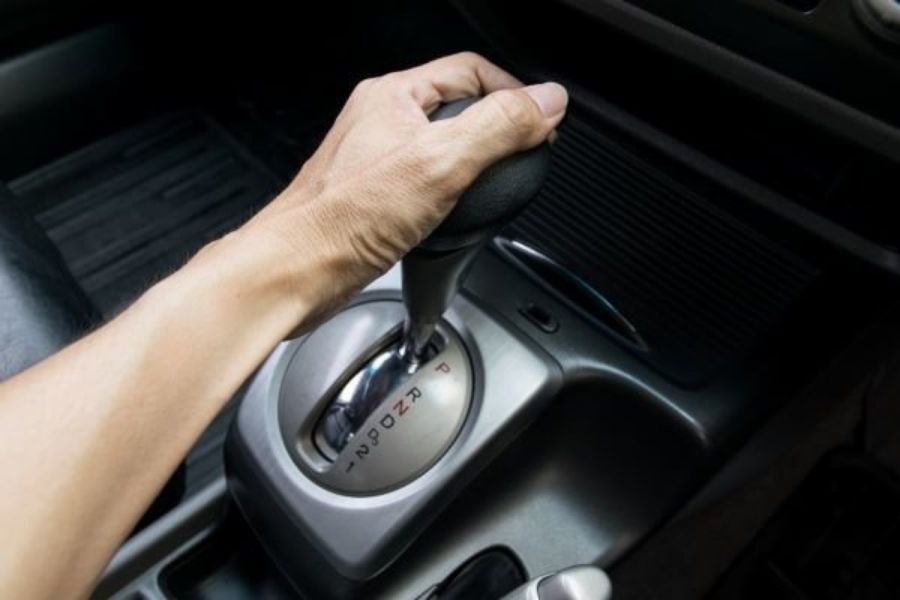
What does D3 mean in automatic cars?

Car Gear Shift Automatic Different Types Of Gearbox Explained | The

Car Gear Shift Automatic Different Types Of Gearbox Explained | The

How to Understand Automatic Car Gears
Aside from the obvious ones like the P (Park), R (Reverse), N (Neutral), and D (Drive), there are other things written on the indicator of your automatic transmission lever. These are drive modes you use on specific road situations. But what does L, 2, and D3 mean and when do you use them?
Answer (1 of 7): most modern cars have 6 to 9 speed (different gear ratios) transmissions. The + and - next to the D indicate that it is possible to select gear ratios either up or down from D (which lets the transmission make the choice). Often when going down a grade one can select a lower gear
However, be mindful that putting the car in neutral on a flat surface or uphill can result in the car rolling forward or backward, so it's important to use the handbrake in these situations. The "D" in an automatic car stands for "Drive." This mode
P, R, N, D, L – These are the most common letters found on automatic transmissions. They stand for Park, Reverse, Neutral, Drive, and Low . Park – This puts the transmission in, well, park.
I was told just to shift the car gear in D position, and the car will start moving. Later, when Japanese cars begun to appear on our roads with CVT gearboxes, we saw S and B gears in automatic cars instead of usual D1, D2 and D3. The previous shape of Honda City with CVT (Vario) also had same automatic car symbols on its gear lever as well.
For more information, click the button below.
Tags

Sonya
Impulsionado pelo compromisso com a educação no ambiente escolar, construí minha trajetória com o objetivo de ampliar as oportunidades de aprendizagem e gerar impactos positivos para estudantes, educadores e comunidades escolares. Ao articular princípios pedagógicos, experiência cotidiana em sala de aula e diálogo contínuo, desenvolvo práticas educacionais inovadoras, inclusivas e aplicáveis, que respeitam a diversidade dos modos de aprender e respondem às necessidades reais da escola - shop.forgiato.com.
