Automatic Road
Extracting roads from multi-source data, such as aerial images and vehicle trajectories, is an important way to maintain road networks in the filed of urban computing. In this paper, we revisit the problem of road extraction and aim to boost its accuracy
TL;DR: It shouldnt be a mission requirement.So,The big issue with the automated roads is that they appear as mission requirements. I just spent an hour paving a road on whch the mud was causing issues, only for the game to give me a mission to auto build a road there a few hours later. This mea
Automated Roads provides specialized expertise to transportation agencies, infrastructure industry, standard organizations, academia, and investors . We offer innovative solutions to blend connected and automated vehicle technologies to transform

Road Signs
The dataset incorporates over 55,000 instances of road damage, specifically longitudinal cracks, transverse cracks, alligator cracks, and potholes. Designed to facilitate the development of deep learning methodologies for automated road damage detection and classification, RDD2022 was unveiled as part of the Crowd sensing-based Road Damage Detection Challenge (CRDDC'2022), with a major contribution from the challenge winners.
In this paper, we propose a fully automated pipeline for extracting road networks from very-high-resolution (VHR) satellite imagery. Our approach directly generates road line-strings that are seamlessly connected and precisely positioned.
This confirms that DuARE is a practical and industrial-grade solution for large-scale cost-effective road extraction from multimodal data. Presentation video. We present an automatic road extraction solution named DuARE, which is designed to exploit the multimodal knowledge for underlying road extraction in a fully automatic manner.
Efficient monitoring of road networks is crucial for urban planning and infrastructure development. This paper presents GeoDrishti, an innovative system for automatic road extraction and alert generation from satellite imagery. Leveraging medium-resolution images from the Resourcesat LISS IV sensor available through the Bhoonidhi portal, our system addresses the challenge of detecting roads with widths of 20m and above.
Automatic road detection is a challenging and representative computer vision problem due to a wide range of illumination variations and weather conditions in real traffic . This paper presents a novel real-time road detection method that is able
This paper develops two functional semantic features (i.e. travel path selection probability and regional attractiveness) to measure the functional importance of roads and proposes an automatic road network selection method based on graph convolutional networks (GCN), which models road network selection as a binary classification.
We adapted U-Net++ and ResneXt50_32×4d architectures to produce multi-class segmentation masks and perform feature extraction to determine various road types accurately. We achieved remarkable results, with 98.73% overall accuracy, 41.99% intersection of union, and 46.61% F1 score values. The proposed method can be implemented in DHK maps of different countries to automatically extract different road types and used for transfer learning of different historical maps.
This list includes all Automated Road Vehicles that have carried the general public at 10 km/hr (6.2 mph) or more with no system employees on board
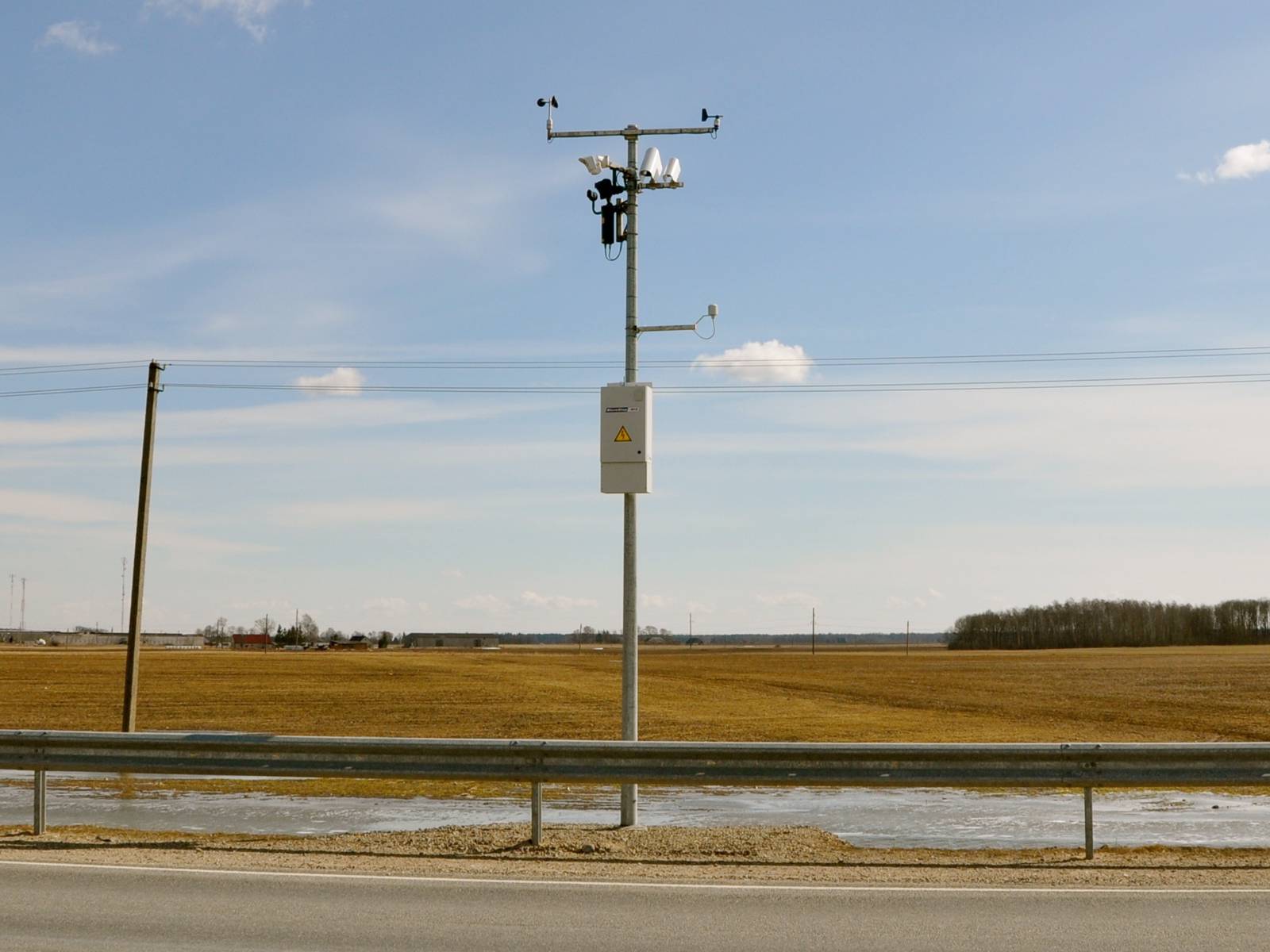
MicroStep-MIS
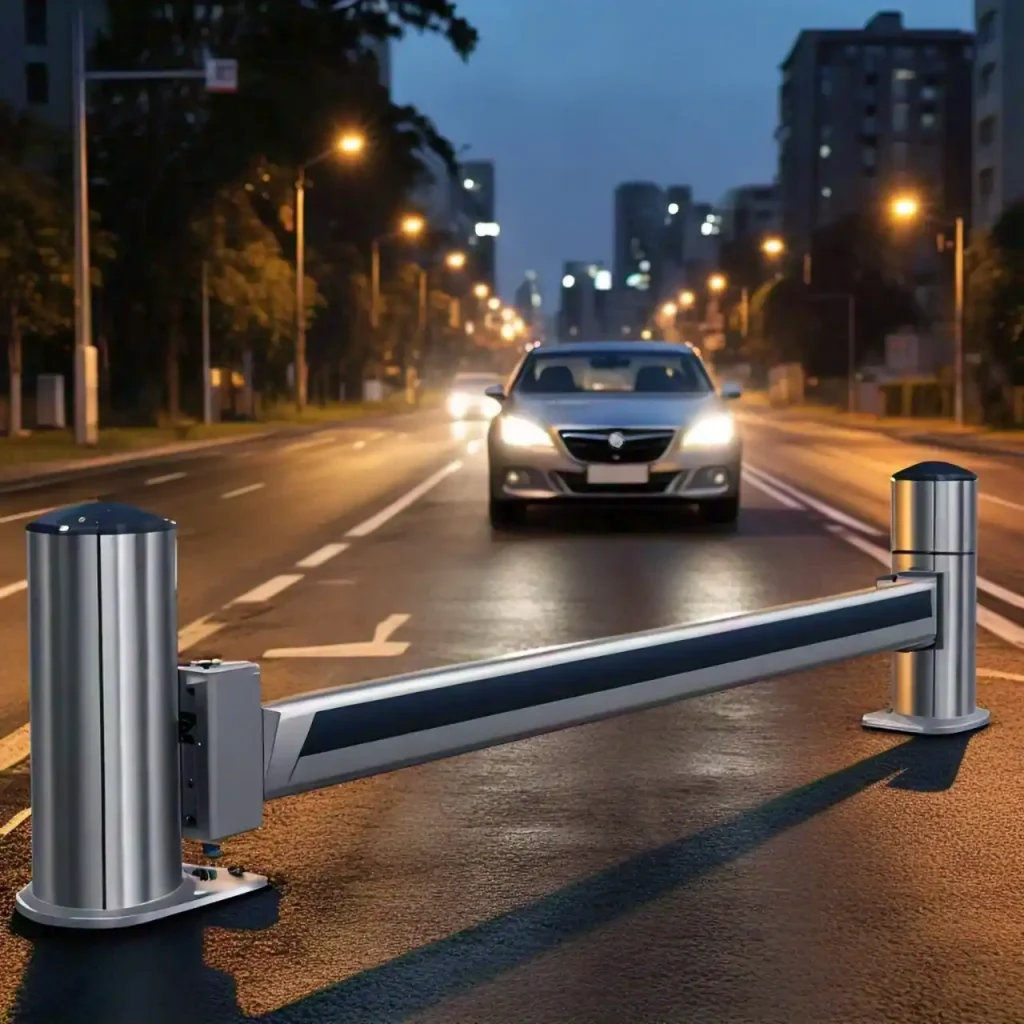
Automatic Road Barriers : OSIL

China Automatic Road Block Manufacture and Factory | Heweiyongtai
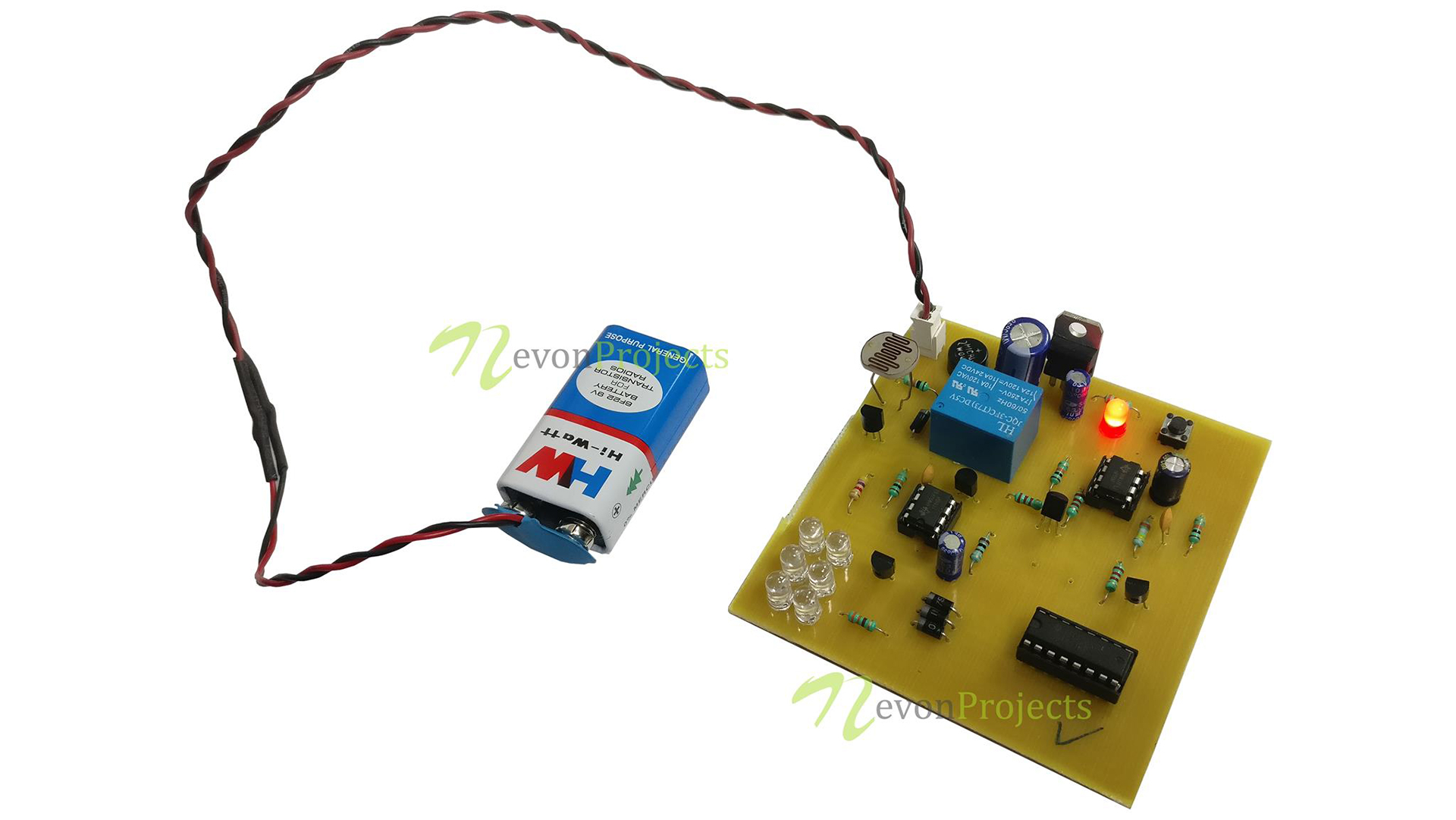
Automatic Road Reflector Light | Nevonprojects
This function differs from those in most previous studies but is more suitable for road segmentation. Extensive experimental results on two benchmark datasets compared with several baseline models demonstrate the superiority of the proposed GC-DCNN algorithm. Automatic road segmentation from remote sensing images is an important research hotspot in the remote sensing and pattern recognition fields.
road quality surveying system, called the Automatic Road Analyzer (ARAN), which measures several road-
Downloaded data has 4 types of imagery: Multispectral, Pan, Pan-sharpened Multispectral, Pan-sharpened RGB. 8-bit RGB imagery support and 16-bit RGB imagery experimental support is available with Multi-Task Road Extractor Model (Multispectral imagery will be supported in the subsequent release).
Originally posted by gargoyleking:Not a feature as of yet. If you are having trouble with automated routes I suggest using a leveler to push rocks and debris out of the way and then making short road sections to bypass the worst of the pits/issues. That or design your route to go around them.
The method is based on Marr's theory of vision, which consists of low-level image processing for edge detection and linking, mid-level processing for the formation of road structure, and high-level processing for the recognition of roads. It uses a combined control strategy in which hypotheses are generated in a bottom-up mode and a top-down process is applied to predict the missing road segments.
AUTOMATED ROAD TRANSPORT Automated road transport is considered one of the major key technology influencing and shaping the future mobility and quality of life since it addresses many of the challenges of today's transport system such as road safety, to reduce accidents caused by human errors,
For more information, click the button below.
Tags

Sonya
Impulsionado pelo compromisso com a educação no ambiente escolar, construí minha trajetória com o objetivo de ampliar as oportunidades de aprendizagem e gerar impactos positivos para estudantes, educadores e comunidades escolares. Ao articular princípios pedagógicos, experiência cotidiana em sala de aula e diálogo contínuo, desenvolvo práticas educacionais inovadoras, inclusivas e aplicáveis, que respeitam a diversidade dos modos de aprender e respondem às necessidades reais da escola - shop.forgiato.com.
