Double Wishbone
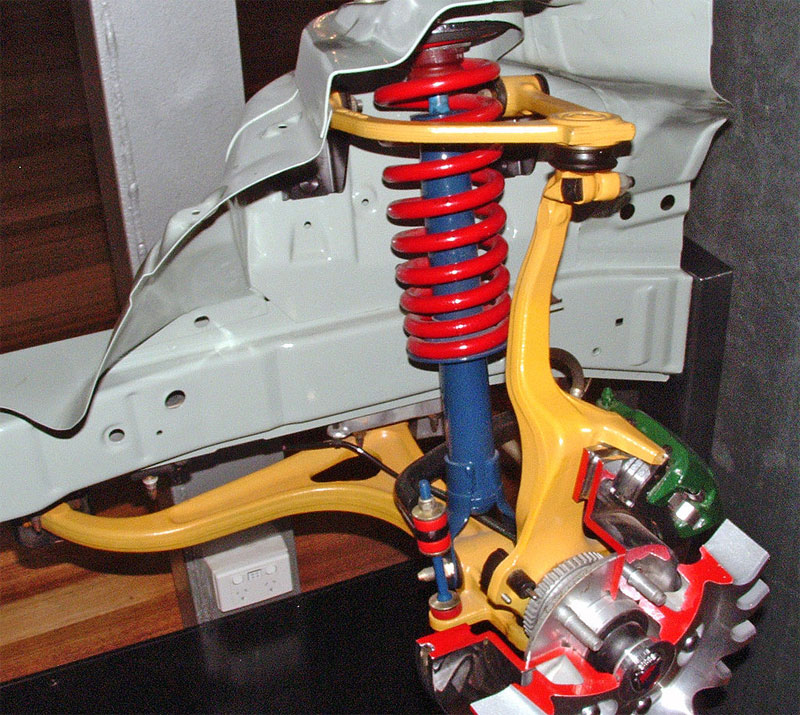
A double-wishbone setup is made up of two wishbone-shaped arms (hence the name and these are sometimes called ‘A-arms’) with one at the top and another at the bottom, with the damper attached to the latter.
A double wishbone suspension is an independent suspension design for automobiles using two (occasionally parallel) wishbone-shaped arms to locate the wheel . Each wishbone or arm has two mounting points to the chassis and one joint at the knuckle. The shock absorber and coil spring mount to
In automobiles, a double wishbone suspension is an independent suspension design using two parallel wishbone-shaped arms to locate the wheel . Each wishbone (or arm) has two mounting positions to the chassis and one joint at the knuckle. The shock absorber and coil spring mount to the wishbones
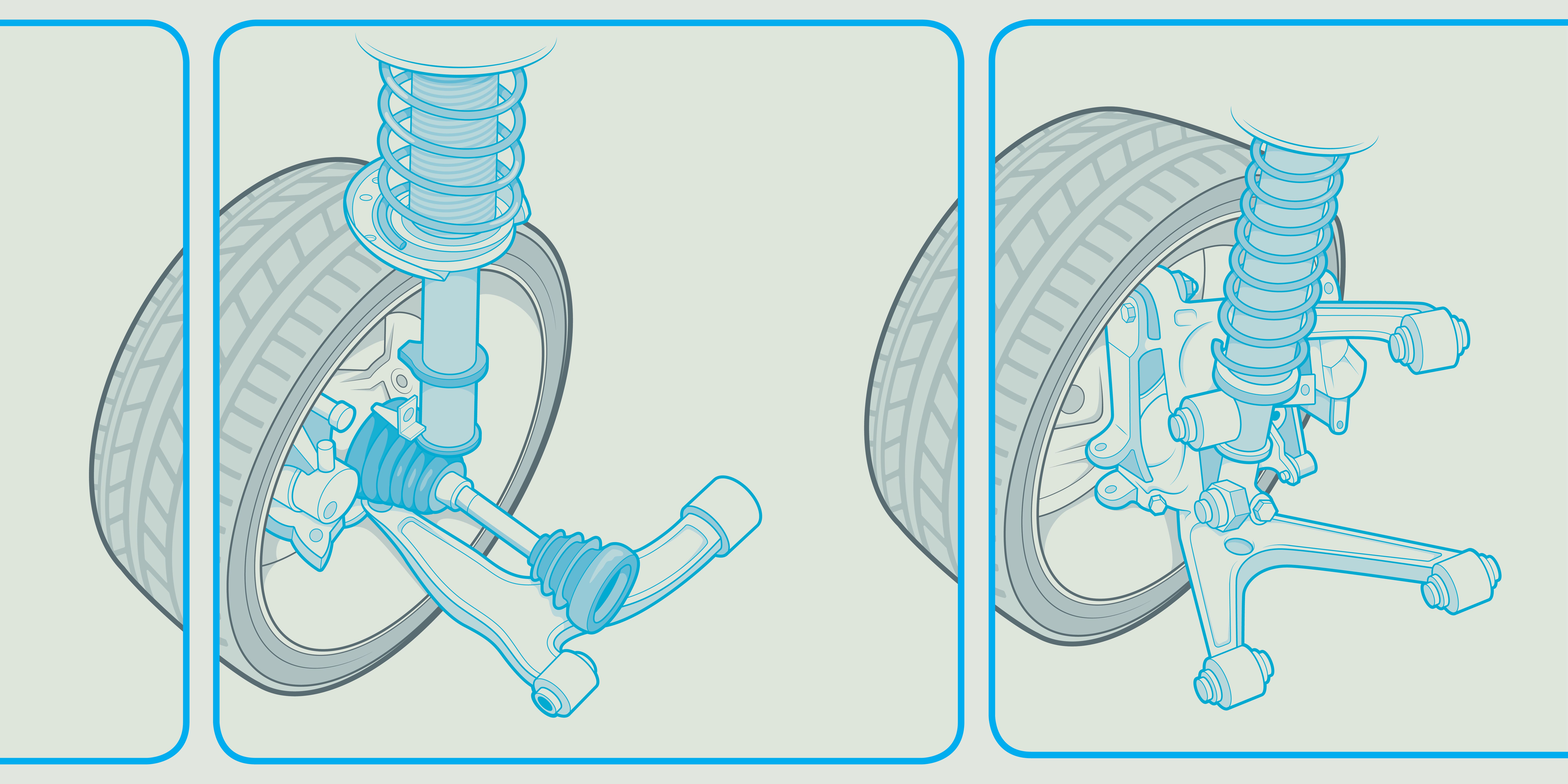
Macpherson Strut, Double Wishbone, Trailing Arm Suspension, 58% OFF
Wishbone suspension is usually front. A system is recognized as double wishbone when there is a wishbone configuration in the front, as well as in the back, of a vehicle .
There are a lot of accepted truths in the automotive world. One is that where performance is concerned, double-wishbone suspension is superior. Most race cars use double wishbones and a lot of the best road cars do too. Yet, if you were to draw up a list of the best-handling cars of all time, you'd find that many use MacPherson struts.
This includes controlling the wheel’s motions, via parameters like camber angle, caster angle, toe pattern, roll centre height, scrub radius and scuff. Double wishbone suspension systems are common on high performance cars and sporty sedans .
As you can see the entire rear section of the frame has been re-designed to accommodate the double wishbone setup. The wishbones are standard TR6 front suspension parts, but the vertical link is a complete new design as is the lower spring pan. The customer was also modifying the drivetrain to accommodate a Chevy V6 engine and matching differential.
Double Wishbone Suspension: This system uses two control arms (upper and lower) that form a wishbone shape , hence the name. The control arms connect the wheel hub to the vehicle frame, which allows for precise control of wheel motion.
Today, double wishbone suspension is more commonly found on vehicles that have a body/frame construction, while MacPherson struts are more commonly found on unibody designs. Some car owners interpret this to mean that double wishbone is used for trucks and vans whereas the alternative is for sedans and compact cars, but that would be an over-generalization.
Structure: This system uses two wishbone-shaped arms to locate and control the wheel . Each arm, one upper and one lower, connects the wheel assembly to the vehicle’s frame and allows for precise control of the wheel throughout its range of motion.
The double wishbone car suspension system consists of two independent control arms, each connecting between the vehicle’s chassis and the wheel. This design, driven by the geometry of motion, not only effectively absorbs road vibrations but also maintains optimal contact between the tires and the road surface.

Double Wishbone Suspension
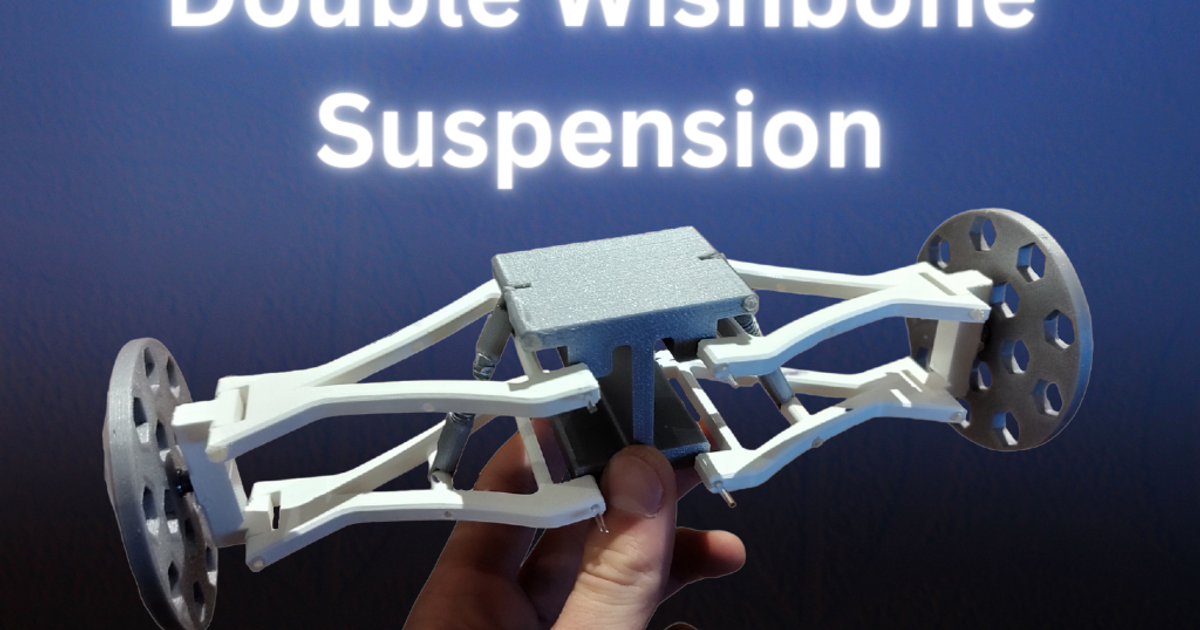
Double Wishbone Suspension by Max Siebenschläfer | Download free STL ...
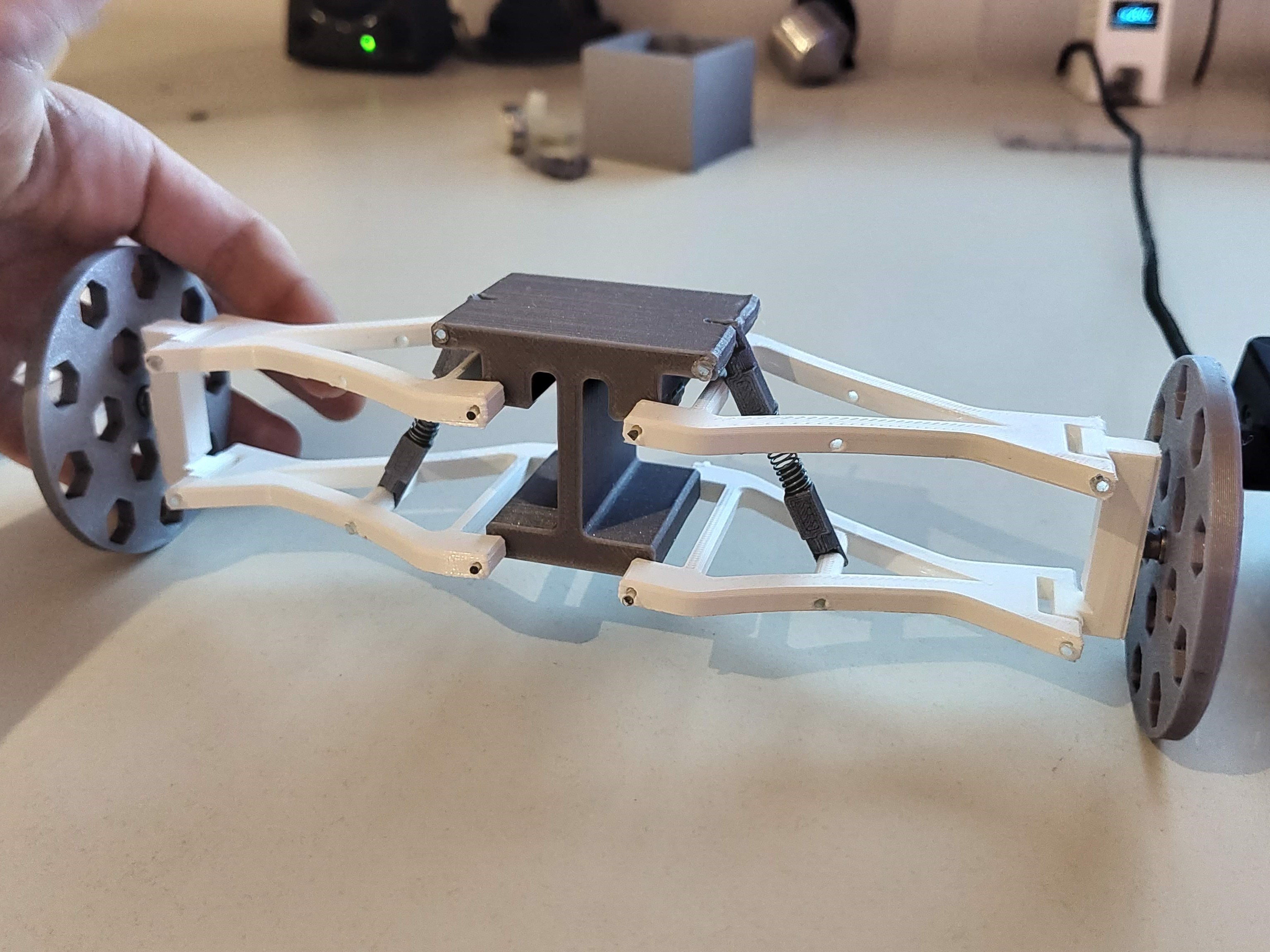
Double Wishbone Suspension by Max Siebenschläfer | Download free STL ...
80+ Car Models With a Double Wishbone Suspension (2026 update)
When it comes to on-road driving premium models use them. The double wishbone suspension is named so because of the way the two control arms resemble wishbones .
The double-wishbone suspension is a form of independent suspension comprising, wait for it, two wishbone-shaped (or Y-shaped) control arms connected to the chassis on one end and the wheel knuckles on the other
The front double wishbone suspension is engineered to provide inspired handling performance and a responsive feel. Lateral stiffness is up 85 percent in front and 45 percent in the rear of the double-wishbone system, when compared to the previous TLX’s MacPherson strut design.
2021 TLX Double Wishbone Front Suspension
🦾 Double Wishbone: Built for Performance The double wishbone suspension (also called A-arm suspension) uses two control arms to allow for greater control of wheel motion and camber angle .
In particular, the double wishbone design is difficult to manufacture but offers solid handling attributes, while MacPherson systems are lighter and more compact — and they offer better smoothness on the highway.
For more information, click the button below.
Tags

Sonya
Impulsionado pelo compromisso com a educação no ambiente escolar, construí minha trajetória com o objetivo de ampliar as oportunidades de aprendizagem e gerar impactos positivos para estudantes, educadores e comunidades escolares. Ao articular princípios pedagógicos, experiência cotidiana em sala de aula e diálogo contínuo, desenvolvo práticas educacionais inovadoras, inclusivas e aplicáveis, que respeitam a diversidade dos modos de aprender e respondem às necessidades reais da escola - shop.forgiato.com.
